
Cold chain cyberattacks in 2026: the timeline
From French supermarkets to France’s blood service, attackers spent autumn 2026 turning refrigeration controllers against the products they protect.
Updated
This page tracks the publicly reported attacks on refrigeration and cold-chain systems in 2026, with links to the original reporting. We update it as official findings come out.
October 11–12: the French retail wave
Over one weekend, attackers reached refrigeration controllers at about 700 commercial sites across France, from supermarkets to butchers and food distributors. They raised temperatures and forced defrost cycles, which shut cooling off. Store groups affected included Casino, Leclerc, Coopérative U, Metro, Carrefour and Intermarché.
According to France’s cyber crisis coordination body, the attacks caused food losses in the tens of millions of euros and started at least 15 fires as plant was driven hard. Early reporting estimated 250 to 350 supermarkets; the official count rose to about 700 sites.
The controllers reportedly targeted included Danfoss AK-SM and AK-SC supervisory units and Copeland/Dixell XWEB controllers, both used to monitor and manage refrigeration remotely.
Sources: The Register, Axios, BleepingComputer
November 1–2: France’s national blood service
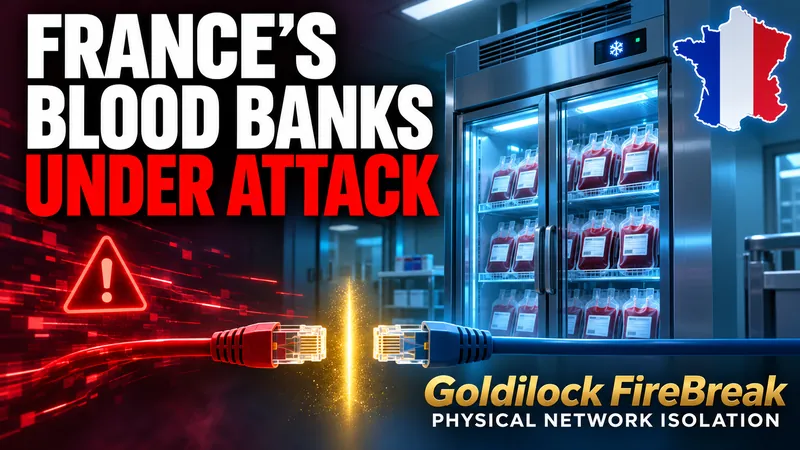
Overnight between November 1 and 2, attackers changed settings on cold-storage chambers at three sites run by the Établissement français du sang (EFS), the French Blood Establishment. Temperature and defrost thresholds were pushed to extreme levels in chambers holding blood products and biological samples.
EFS was not the direct target. The attack went through its refrigeration equipment supplier. Coolworld Rentals confirmed that an incident involving remote monitoring software had affected a limited number of its units and said the vulnerability sat in a third-party component outside its direct control.
EFS’s own monitoring and alarms caught the temperature change quickly. Staff fixed equipment or moved products to other refrigeration, and EFS reported no health impact and no loss of blood products. It is working with ANSSI, France’s national cybersecurity agency, and the health ministry.
Sources: BleepingComputer, Associated Press via ABC7
Early November: the second European wave
More than 115 stores across Belgium, the Netherlands, Sweden, Luxembourg, Ireland and Estonia were hit. Some refrigeration systems were shut down entirely and others had set points changed remotely. One Swedish store reported its system generating heat; another saw temperatures set to 50 °C. Belgian refrigeration company Sabcobel said the attackers used the same vulnerability as in October.
Source: BleepingComputer
November 5: joint US warning
CISA, the FBI, the Department of Health and Human Services, the Department of Agriculture and the Department of Transportation published a joint fact sheet warning of ongoing malicious activity against industrial refrigeration and cold-chain monitoring systems worldwide. The agencies pointed to risks of spoiled inventory, equipment damage and fire, and urged every organization that relies on these systems to apply the recommended mitigations and report suspicious activity.
Sources: MeriTalk, BleepingComputer, CBS News
November 9: France attributes the October attacks
France attributed the October retail attacks to Shahid Kaveh, a unit affiliated with Iran’s Islamic Revolutionary Guard Corps. It summoned Iran’s ambassador and said it would push for new EU sanctions. French officials described it as the first offensive cyber campaign on French territory carried out purely for sabotage. The government has not publicly attributed the November wave to the same group.
Sources: Axios, The Register, Infosecurity Magazine
Background: known controller vulnerabilities
In 2025 CISA published advisory ICSA-25-140-03 covering two vulnerabilities in Danfoss AK-SM 8xxA supervisory controllers, CVE-2025-41450 and CVE-2025-41451, which could let an attacker bypass authentication and run commands remotely. It has not been confirmed whether these flaws were used in the 2026 attacks.
What the pattern tells operators
Three things repeat across every incident. The controllers were reachable from the internet. The path in often ran through a vendor or a component the site operator did not manage. And the damage came from changing a handful of settings, not from anything sophisticated once inside. Detection helped EFS; prevention would have meant the command never arrived. That is the case for physical network isolation.
Find out which of your controllers an attacker can reach
We map every refrigeration controller, gateway and vendor connection across your sites, show you which ones are reachable, and design where FireBreak ports go. You get the map whether or not you buy hardware.
Book an exposure check